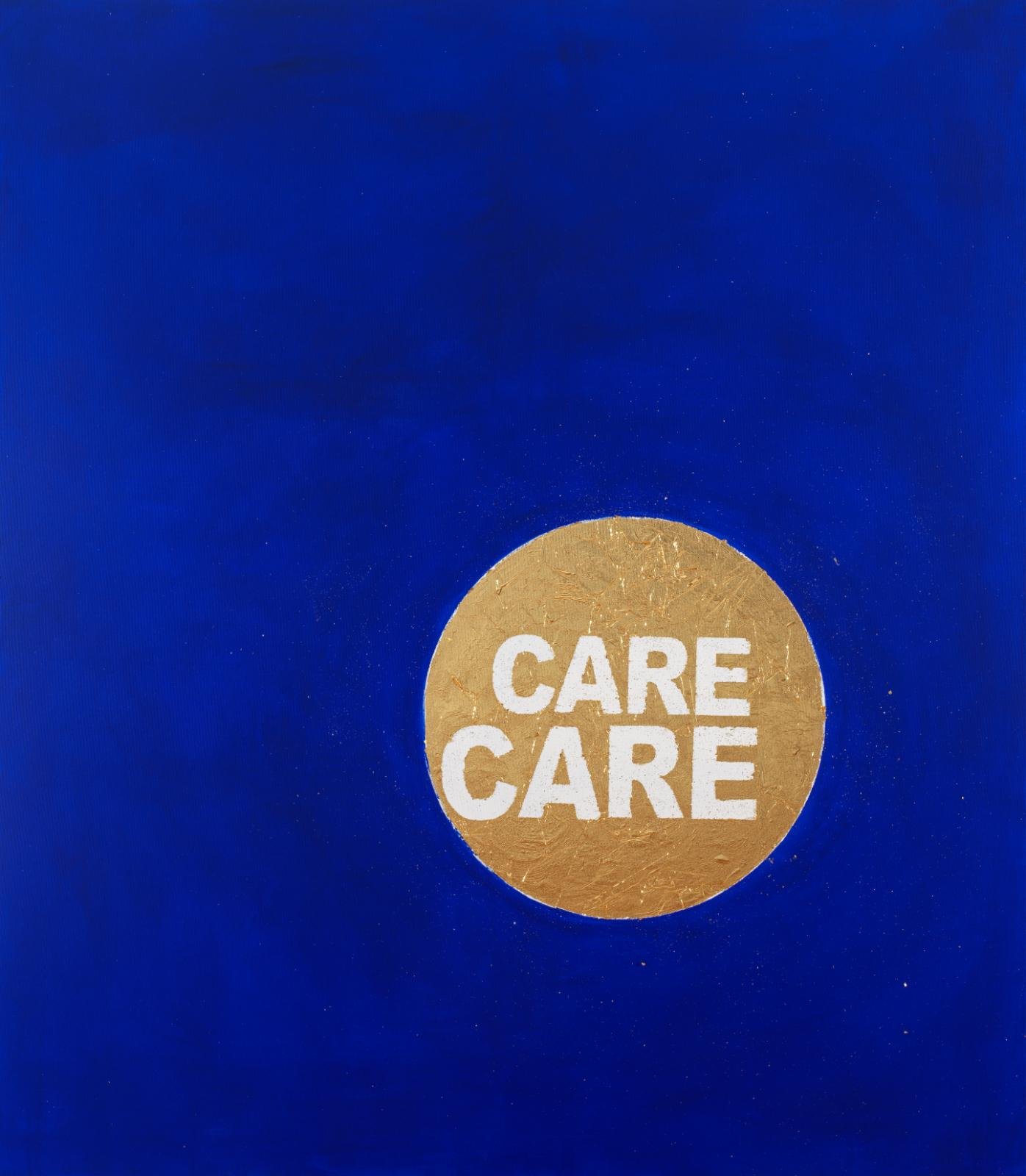
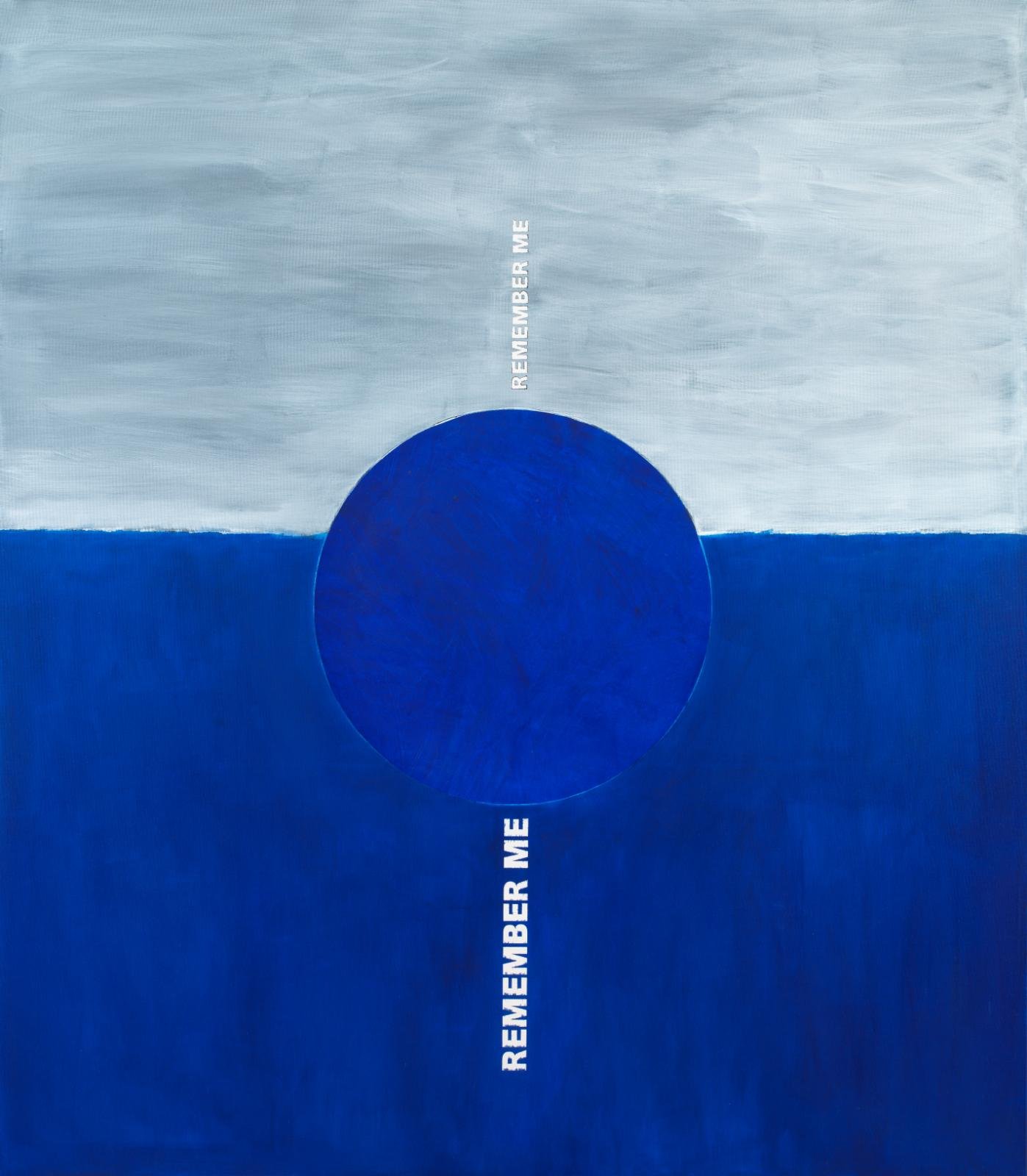
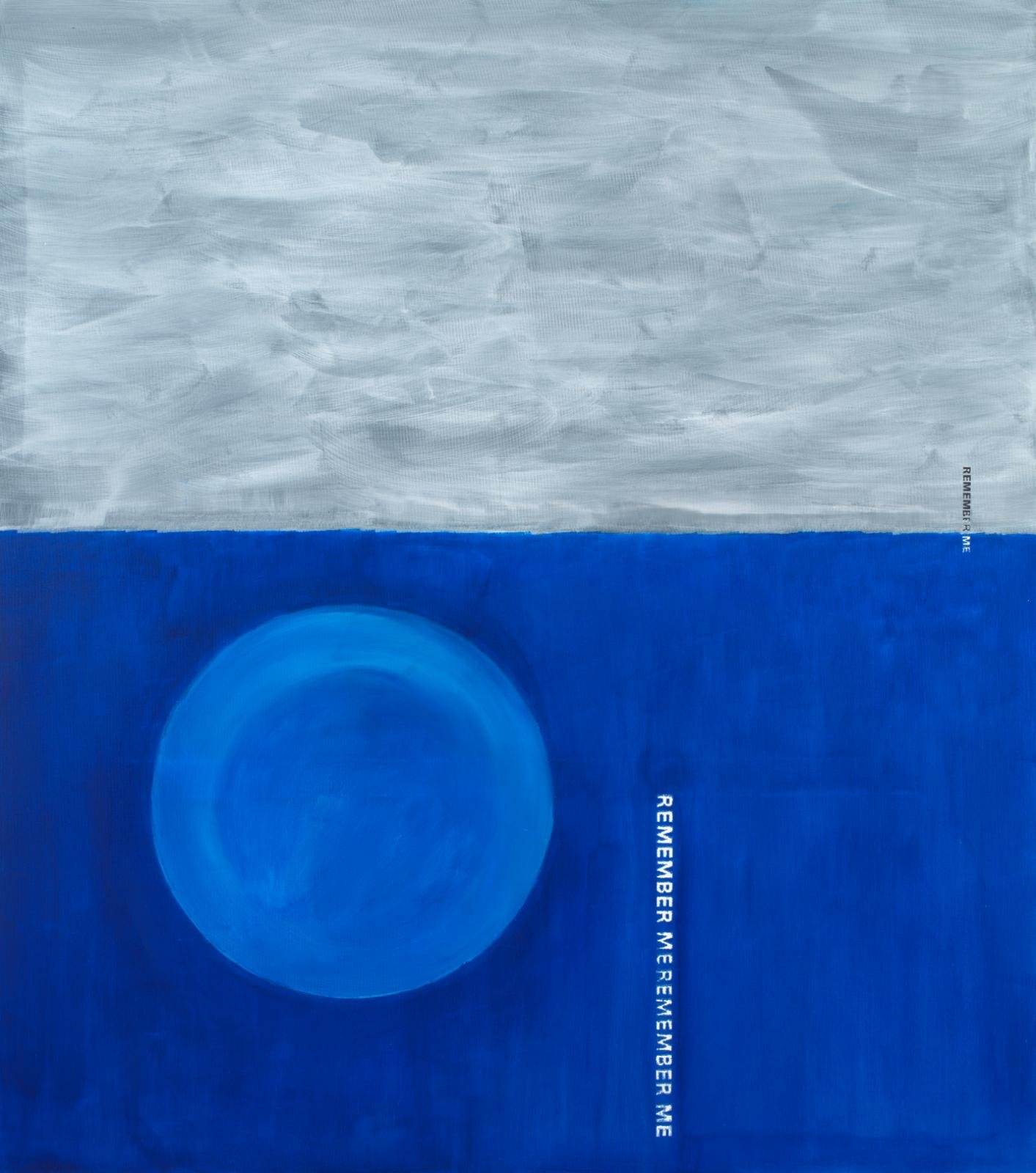
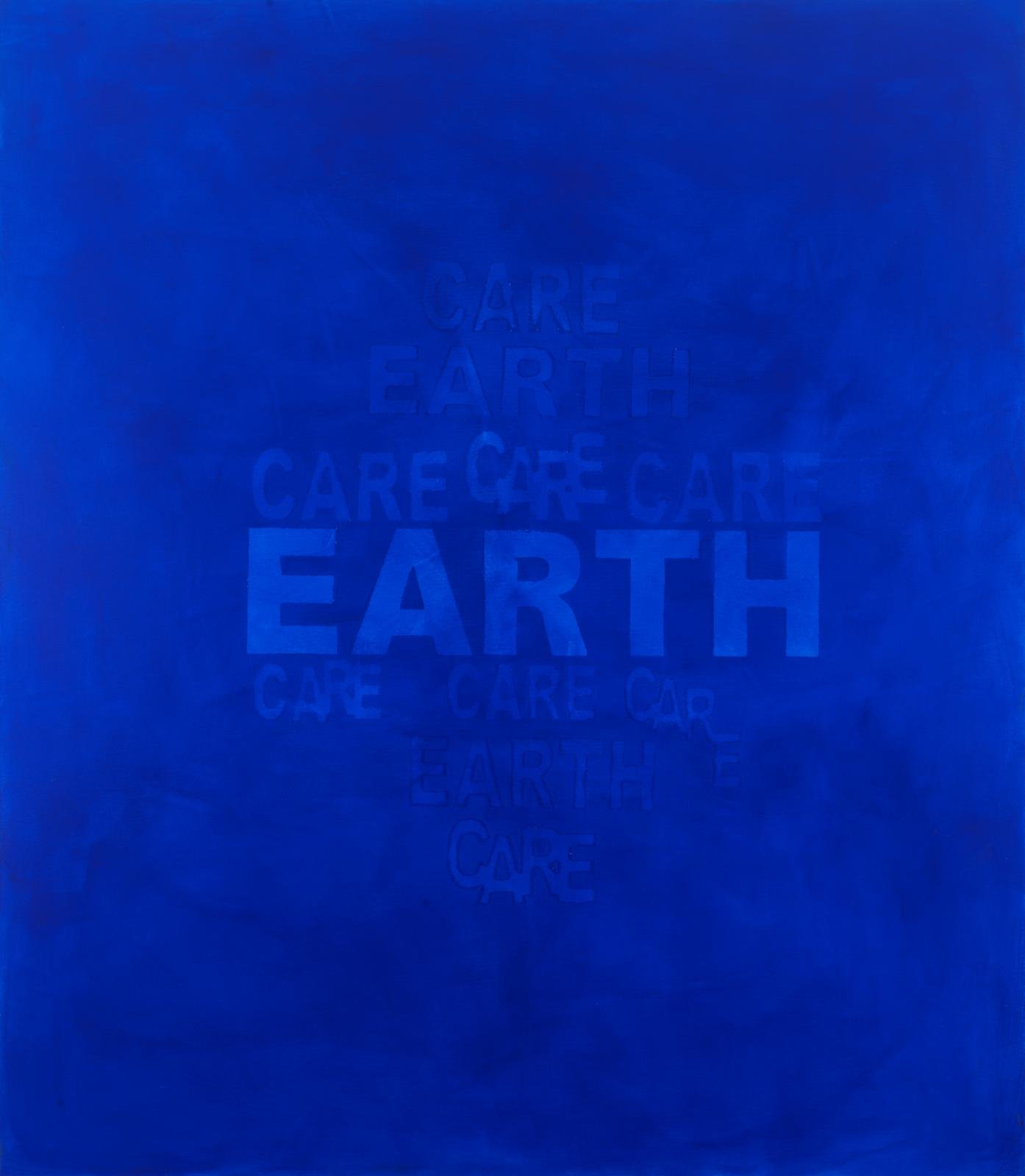
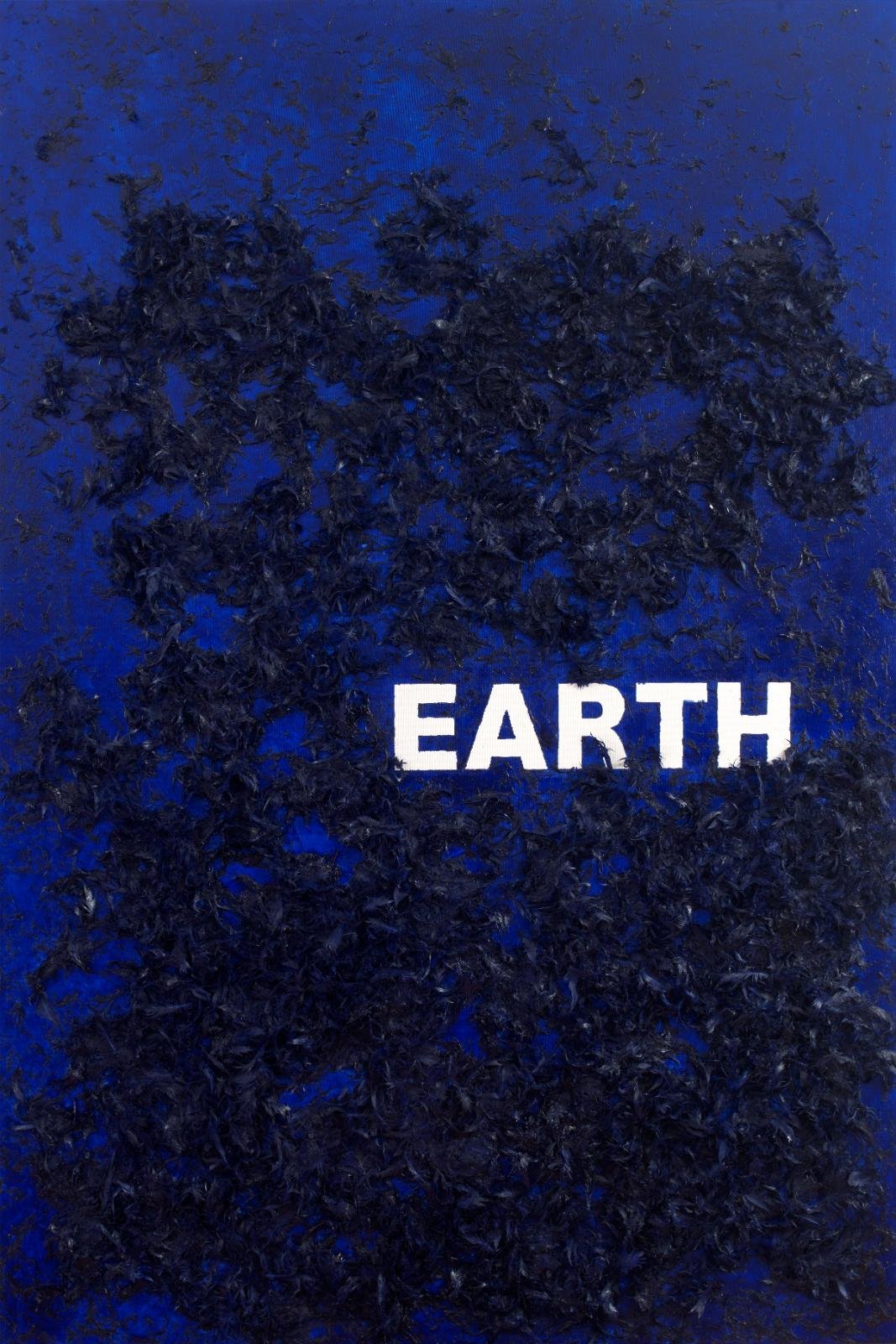
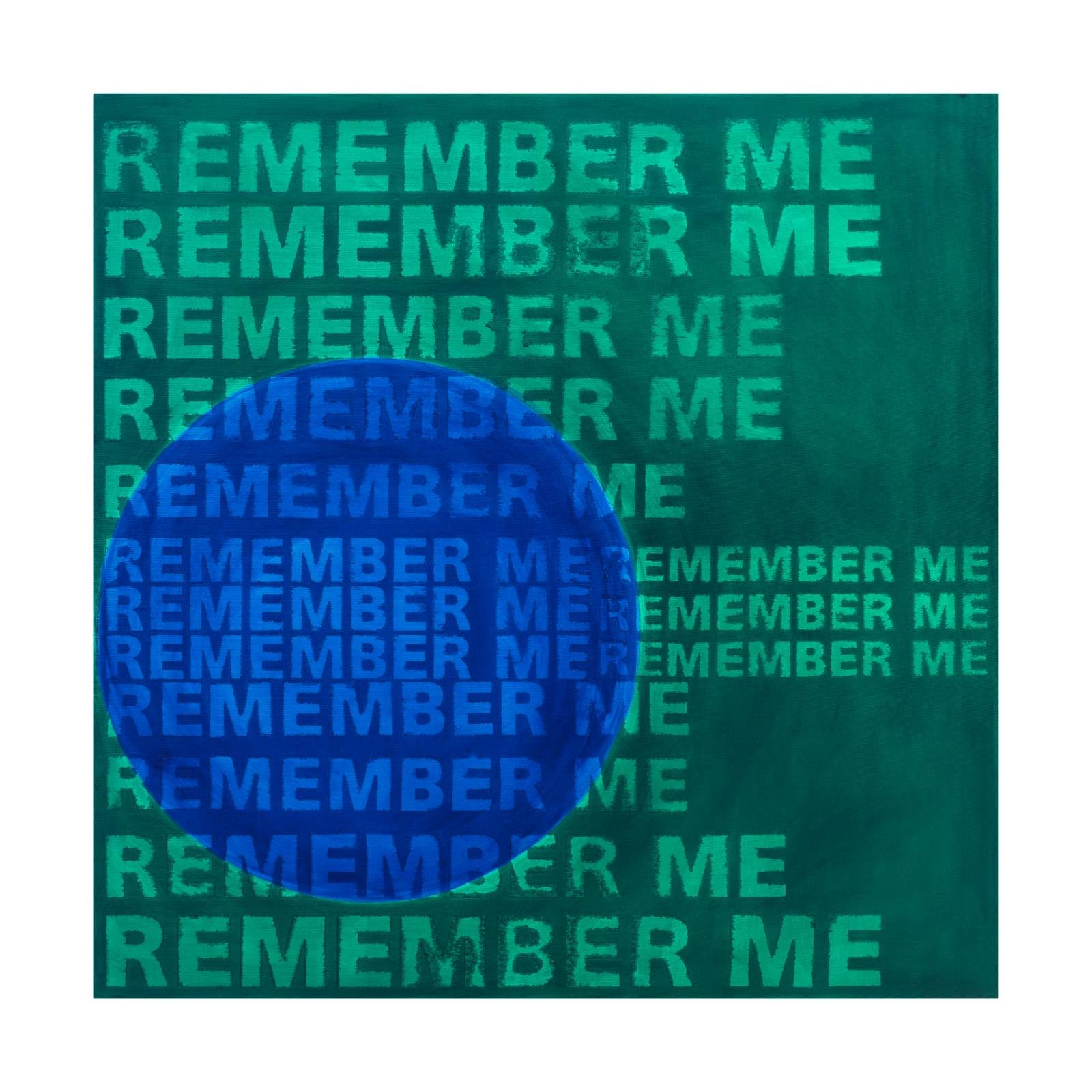
A decisive point of departure for the new body of work was NASA’s Artemis II mission and, in particular, the images recorded during its journey around the Moon in April 2026. Fragoudaki followed this material closely, especially images of Earth as a distant body suspended in darkness. The resulting shift in scale moves from the human to the planetary and, ultimately, the cosmic, with historical precedents in Earthrise (1968) and Blue Marble (1972). In Artemis II (2026), two circular bodies are linked by fine curves suggesting orbital paths and set in relation within an expansive blue field. Cosmic distance heightens the sense of Earth’s materiality and fragility as a finite celestial body.
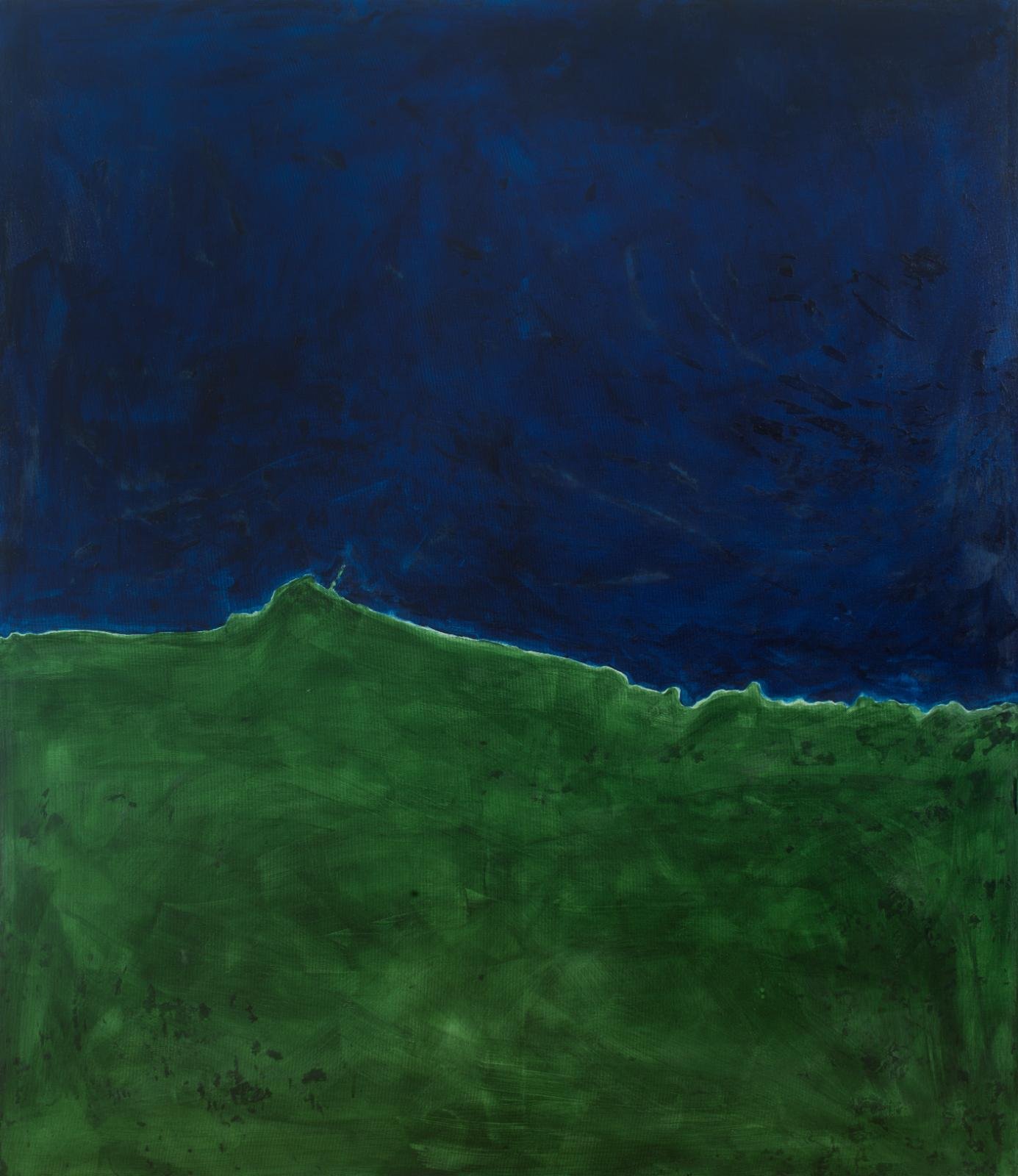
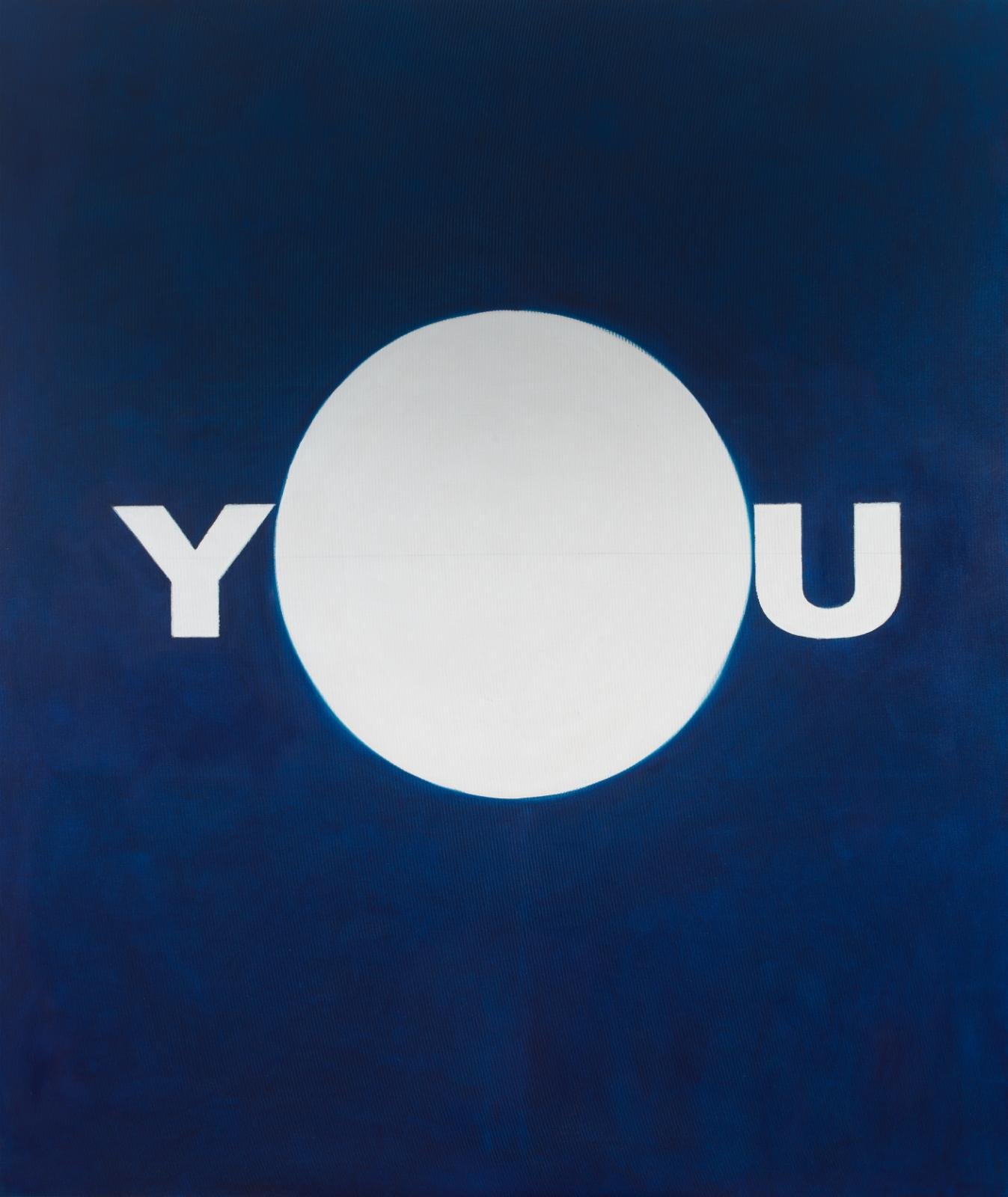
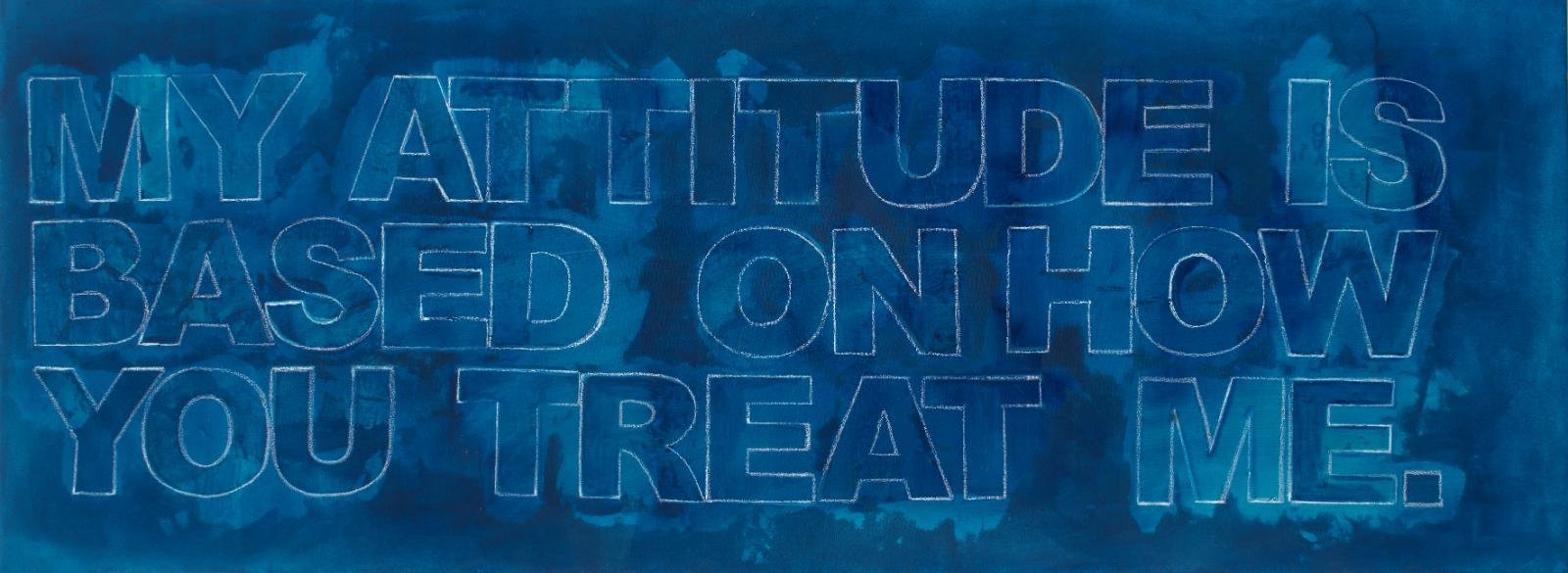
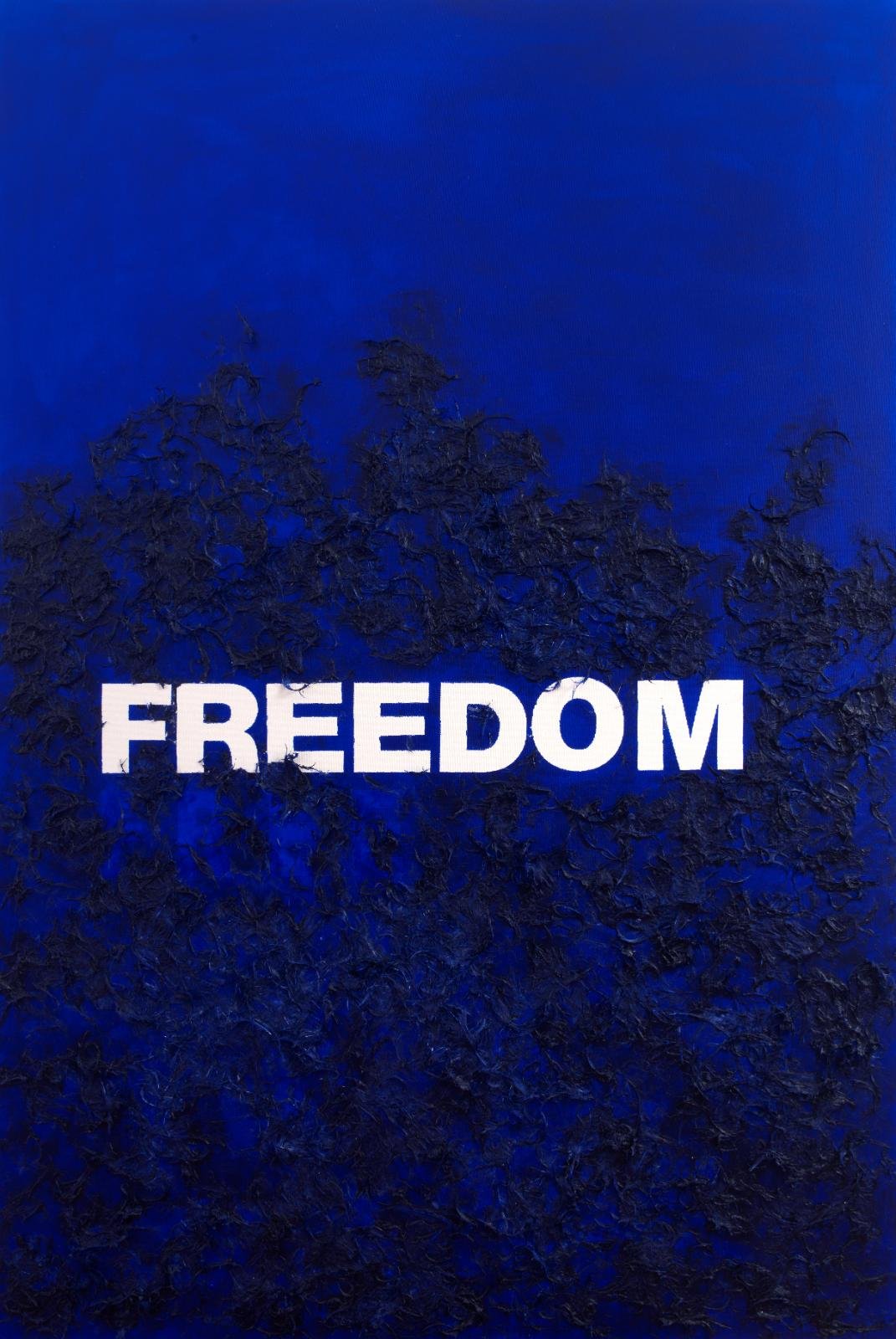
From this position, the return to the ocean continues the same enquiry. Blue links celestial and oceanic imagery and brings Fragoudaki’s work into relation with that of oceanographer and marine biologist Sylvia Earle. Earle’s view that life on Earth depends on ocean systems finds concise expression in the phrase ‘No Blue, No Green’, which Fragoudaki incorporates, in full or abbreviated form, into the titles of three works. In No Blue, No Green I and II, dry pigment is combined respectively with fragmented gypsum and found glass from Leros Island, disrupting the homogeneity of the painted surface. In the eponymous No Blue, No Green, the composition is organised around the phrase ‘NO BLUE / NO GREEN’, while in Protecting the Blue a deep blue core is surrounded by a gold contour and a green ground. In Equilibrium, broad fields of blue and green meet along a narrow luminous band, giving pictorial form to their fragile interdependence. Language is equally fundamental to this body of work.